Locks
Folding knife lock types explained
A practical guide to liner locks, frame locks, axis-style locks, back locks, button locks, and what to inspect before ordinary utility use.
As an Amazon Associate I earn from qualifying purchases.
Research basis: maintained product records and referenced background material. This page does not claim hands-on testing unless it documents that work explicitly. Editorial method.
Quick answer
Start with the lock that matches the task and your maintenance habits, not the lock that sounds strongest in isolation. A lock is a safety aid for controlled cuts through cardboard, tape, cordage, camp packaging, and light repair material. It is not permission to pry, twist, force the tip, or ignore blade play.
For most DISPATCH shoppers, the 3 inch drop point liner lock pocket knife is the clearest compact liner-lock example. The 3.58 inch drop point G10 folding knife is the larger utility comparison. The 3.54 inch 8Cr13MoV G10 folding pocket knife is the broad starter pick when the live listing confirms the mechanism and opening style.
If the immediate question is closing, start with how to close a pocket knife safely, then use this page to compare lock types before buying.
| Lock type | Why buyers like it | Check before use | Skip if |
|---|---|---|---|
| Liner lock | Common, easy to understand, and often found on compact utility folders. | The liner seats cleanly behind the blade tang and does not slip under light hand pressure. | You see blade play, gritty lock travel, or inconsistent engagement. |
| Frame lock | Uses part of the handle frame as the lock bar, often with a sturdy feel. | The lock face engages predictably and your grip does not push the bar into a bad position. | You want very light pocket weight or dislike metal handles. |
| Axis or crossbar style | Ambidextrous feel and fingers can stay out of the blade path while closing. | The bar moves freely, returns evenly, and has no gritty spring feel. | You do not want extra moving parts or spring-dependent lock feel. |
| Back lock | Traditional, simple to explain, and usually secure for straight utility cuts. | The rocker clicks fully into place and releases deliberately. | You need frequent one-hand closing or dislike two-hand handling. |
| Button lock | Fast to operate and comfortable when the design is well executed. | The button returns fully and cannot be bumped accidentally during normal grip. | Local rules or workplace rules treat the mechanism differently. |
Liner lock
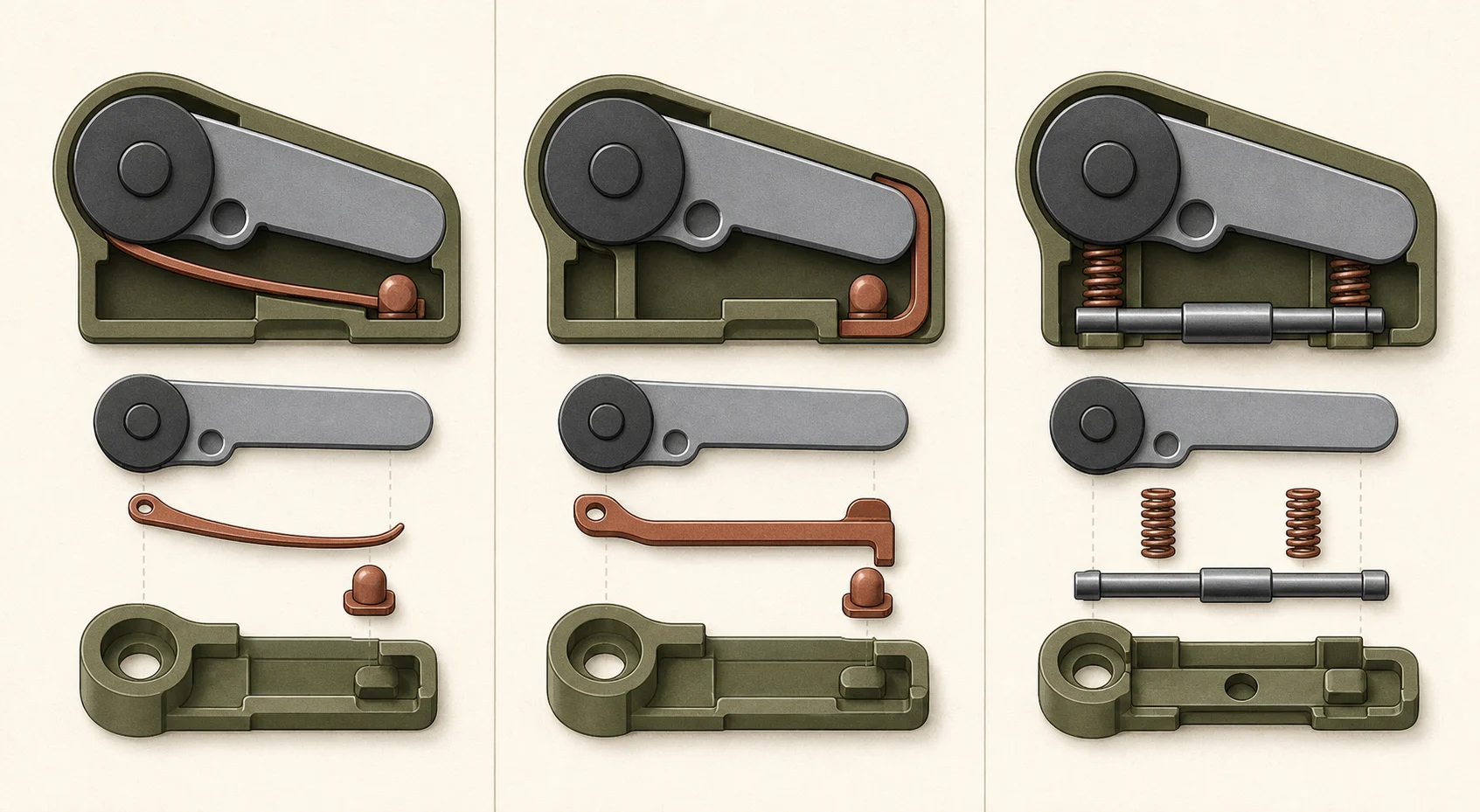
A liner lock uses a thin liner inside the handle to move behind the blade tang when the knife opens. It is common because it is compact, affordable, and easy for beginners to inspect. On a utility folder, the main question is not whether the term sounds strong. The question is whether the lock seats consistently, the blade stays centered, and the knife still feels controlled after cardboard dust, tape residue, and pocket lint get into the handle.
The 3 inch drop point liner lock pocket knife is the site’s compact example. It makes sense for package opening and day-pack utility when the buyer wants a smaller handle and a simple drop point blade. Before purchasing, verify the live listing because retailer wording can change.
For closing steps, move the liner aside only after your fingers are outside the blade path. The dedicated pocket knife closing guide covers the motion in more detail.
Frame lock
A frame lock works like a heavier version of the liner-lock idea: part of the handle frame becomes the lock bar. Buyers often associate it with a solid feel, but the material and execution matter more than the name. A poor frame lock is not better than a well-made liner lock just because it has more metal.
Frame locks can be less comfortable for some users because hand pressure interacts with the lock bar. If your work is mostly boxes, tape, rope, and campsite packaging, choose comfort and predictable lockup over dramatic claims.
Axis-style and crossbar locks
Axis-style or crossbar-style locks use a bar that moves across the blade tang. Many buyers like that the fingers can stay away from the blade path during closing. That does not make the mechanism magic. Springs, bar travel, handle tolerance, and dirt all matter.
This lock style is worth considering if ambidextrous operation matters. It is less attractive if you want the simplest possible mechanism or dislike spring-dependent parts. If the bar feels gritty, does not return fully, or changes feel after pocket carry, stop and inspect before using the knife.
Back locks, button locks, and non-locking folders
Back locks are traditional and easy to explain. They are often a good fit for controlled straight cuts, but many require more deliberate two-hand handling. Button locks can be convenient, but the buyer should verify how the button is protected from accidental contact and whether local rules treat the mechanism differently.
Non-locking folders can be useful in some places and tasks, but they need a different mindset. Since no lock holds the blade open, the user should avoid twisting, heavy pressure, and any cut that tries to fold the blade closed.
How to inspect lockup
Open the knife slowly and deliberately. The blade should reach the open position without gritty resistance, the lock should settle into place, and the blade should not wobble side to side or up and down. Close it carefully and repeat the check a few times. If lockup changes from one opening to the next, do not treat that as normal break-in.
After dusty work, clean before judging the mechanism. Brush lint out of the handle channel, wipe adhesive from the blade, dry the pivot area, and use a very small amount of suitable lubricant only if the action still feels dry. If the lock still feels inconsistent, stop using the knife.
How the DISPATCH examples fit
The 3 inch drop point liner lock pocket knife is the cleanest lock-learning example because it combines a compact size, drop point blade, G10 handle, and liner lock.
The 3.58 inch drop point G10 folding knife gives more handle and blade for camp packaging and cordage. That extra size can feel more comfortable, but it also asks the buyer to think about pocket fit and local blade-length rules.
The 3.54 inch tanto point folding knife is more about blade-shape tradeoffs than lock education. If you choose it, keep the same lock-safety rules and do not use the angular tip for prying.
Before you buy
Check the live listing for the lock type, opening style, blade length, blade steel, handle material, and any local restriction notes. Read this site’s product pages as buyer notes, not as a replacement for the current retailer record.
Also ask whether you can maintain the lock. If you will not clean lint, dry the pivot, or stop when lock feel changes, choose the simplest model that still fits the task.
FAQ
Which lock type is best for a first pocket knife?
A simple liner lock or back lock is usually easiest to understand. For this site’s DISPATCH examples, start with the compact liner-lock drop point if you want a clear first mechanism.
Is a liner lock safe enough?
It can be safe for controlled utility cuts when it is well made, clean, and fully engaged. It is not a license to pry, twist, or force the blade.
Are axis-style locks better than liner locks?
They are different. Axis-style locks can be comfortable and ambidextrous, but they use extra moving parts. A clean, consistent lock matters more than the label.
What if the lock feels gritty or inconsistent?
Stop using the knife, clean visible dirt, inspect the pivot and handle channel, and do not keep cutting until lockup is predictable.
Sources and verification
These external references support product identity, mechanisms, maintenance, sharpening, safety, or law-checking. Retail listings and local rules can change, so verify current details before acting.
Practical guides for choosing and caring for folding knives
Start with direct buying guides, material explainers, maintenance notes, and safety limits before choosing a folding knife.
How to close a pocket knife with no button (by lock type)
How to close a pocket knife by lock type, including liner locks, frame locks, back locks, button locks, and folders with no button.
How to choose a pocket knife for everyday utility
Find the shortest pocket knife for your everyday cutting task, then verify blade shape, lock, upkeep, local rules, and live DISPATCH model details.
Budget pocket knife buying checklist: what to verify
A practical checklist for choosing an affordable pocket knife by model identity, task fit, blade length, steel, lock type, maintenance, and DISPATCH examples.
DISPATCH Amazon starter shortlist
Use these first picks to compare blade size, handle texture, lock style, and everyday utility tasks before checking final product details on Amazon.