Safety
How to close a pocket knife with no button (by lock type)
How to close a pocket knife by lock type, including liner locks, frame locks, back locks, button locks, and folders with no button.
As an Amazon Associate I earn from qualifying purchases.
Research basis: maintained product records and referenced background material. This page does not claim hands-on testing unless it documents that work explicitly. Editorial method.
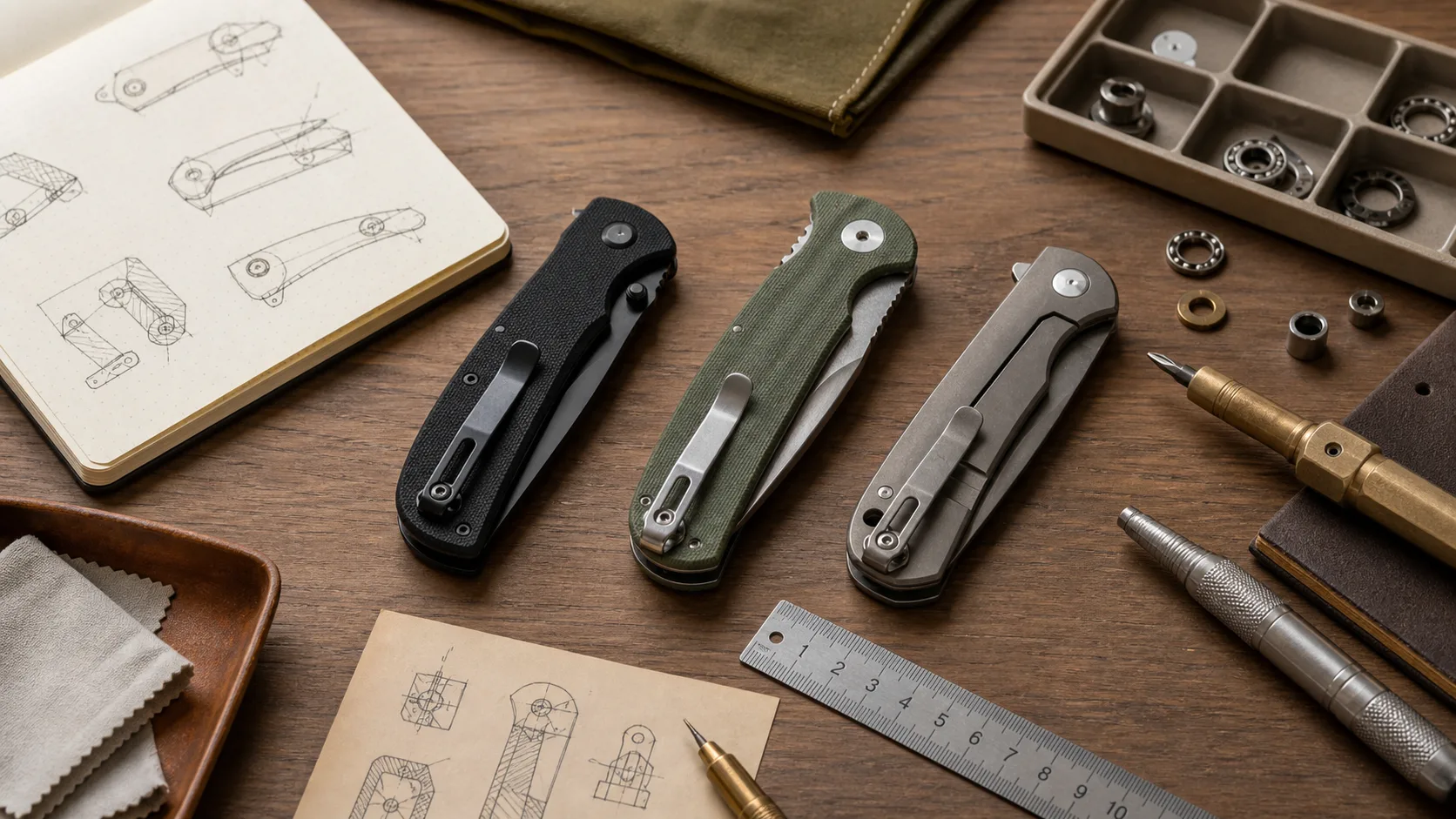
Quick answer
To close a pocket knife safely, identify the lock first, keep your fingers out of the blade path, release the lock slowly, and guide the blade closed under control. Do not snap the blade shut, force a sticky mechanism, or press a button or bar you do not understand.
If the knife has no visible button, it may use a liner lock, frame lock, back lock, crossbar-style lock, or no lock at all. Look at the handle and lock area before moving the blade.
| Knife type | How it usually closes | Finger-safety note | Stop if |
|---|---|---|---|
| Liner lock | Move the liner away from the blade tang, then guide the blade closed. | Begin the blade movement, then move fingers clear before finishing. | The liner sticks, slips, or does not engage consistently. |
| Frame lock | Move the handle-frame lock bar aside and close slowly. | Do not let your grip push the lock bar into the blade path. | The bar feels sticky or the blade has play. |
| Back lock | Press the spine release and fold the blade with control. | Use two hands if needed; the release can be stiff. | The rocker does not release or click back cleanly. |
| Button lock | Press the button while controlling the handle and blade movement. | Keep the edge path clear before pressing. | The button sticks or can be bumped during normal grip. |
| Crossbar-style lock | Pull the bar back and let the blade move only as fast as you can control. | Fingers can stay clear, but the blade still needs control. | The bar drags, feels gritty, or does not return evenly. |
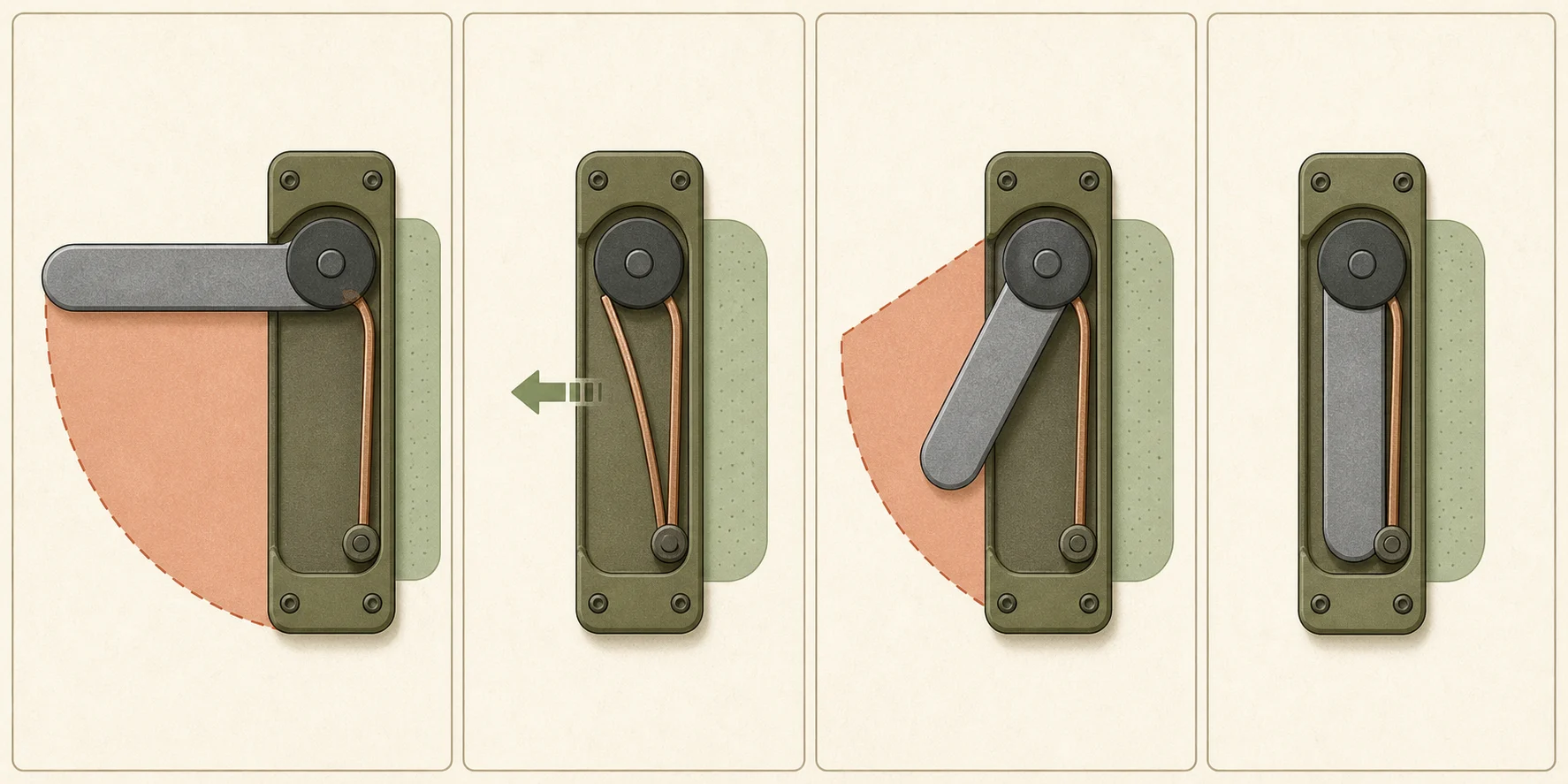
Before you touch the release
Hold the handle securely, turn the edge away from your fingers, and slow down. Most closing mistakes happen because the user presses a release before knowing where the blade will travel.
Check three things first:
- Where is the lock or release?
- Where will the blade move when the lock releases?
- Are your fingers outside that path?
If the knife feels gritty, sticky, or unusually stiff, do not force it. Tape residue, pocket lint, cardboard dust, or dried moisture can make a normal folder feel wrong.
How to close a liner lock knife
A liner lock uses a thin liner inside the handle to hold the blade open. To close it, hold the handle, move the liner to the side, begin closing the blade slightly, move your fingers clear, and then finish closing the blade slowly.
The 3 inch drop point liner lock pocket knife is the clearest DISPATCH example for learning this motion. It is compact enough to inspect easily and uses a practical drop point blade for ordinary package and day-pack tasks.
The key habit is control. Do not push the liner aside and let the blade fall. If the liner feels rough after cardboard, tape, or dirt, clean the handle channel before judging the lock.
How to close a pocket knife with no button
If there is no button, do not assume the knife is stuck. Look for a liner inside the handle, a frame bar on one handle side, a back-lock release along the spine, or a crossbar-style release near the pivot.
If it is a non-locking folder, there may be no release at all. The blade closes by overcoming spring tension. Use two hands, keep fingers clear, and close it slowly.
If you cannot identify the mechanism, stop. Read the product page, inspect the handle under good light, or ask someone experienced before trying again.
Button locks and crossbar-style locks
Button locks and crossbar-style locks can feel convenient because your fingers can stay away from the blade path. That convenience does not remove the need to control the blade.
Press or pull the release only after the knife is pointed into a clear space. Let the blade move slowly. If the release sticks, clean visible lint and residue before adding oil. Too much oil can collect more grit.
What if the knife will not close?
Do not force the blade. First, check for tape residue, lint, grit, bent pocket clip pressure, or an object trapped in the handle channel. Wipe the blade, brush the channel, and dry the pivot area.
If the lock still will not release predictably, stop using the knife. A folding knife with inconsistent lockup is not a good tool for cardboard, cordage, camp packaging, or gear repair until the problem is understood.
DISPATCH examples to compare
Use the 3 inch drop point liner lock pocket knife when you want a compact liner-lock example. Use the 3.58 inch drop point G10 folding knife when you want more handle and cutting length. Use the 3.54 inch 8Cr13MoV folding pocket knife as a broader utility comparison, but verify current lock wording on the live listing before buying.
Product titles, lock descriptions, opening style, restrictions, and seller details can change. Treat this article as a safe handling guide, then verify the current retailer record before purchase.
FAQ
What is the safest way to close a pocket knife?
Identify the lock, keep fingers outside the blade path, release the lock slowly, and guide the blade closed under control.
How do you close a pocket knife with no button?
Look for a liner lock, frame lock, back lock, crossbar-style release, or non-locking slip joint. Do not force the blade if you cannot identify the mechanism.
Why will my pocket knife not close?
The lock may be under pressure, dirty, sticky with tape residue, or blocked by lint or grit. Clean visible debris first. If it still feels wrong, stop using it.
Should I oil a sticky pocket knife lock?
Only after cleaning and drying. Use a very small amount of suitable lubricant, then wipe away excess so it does not collect more dust.
Sources and verification
These external references support product identity, mechanisms, maintenance, sharpening, safety, or law-checking. Retail listings and local rules can change, so verify current details before acting.
Practical guides for choosing and caring for folding knives
Start with direct buying guides, material explainers, maintenance notes, and safety limits before choosing a folding knife.
Folding knife lock types explained
A practical guide to liner locks, frame locks, axis-style locks, back locks, button locks, and what to inspect before ordinary utility use.
Folding knife pivot adjustment guide
How to think about stiff action, washers, bearings, blade centering, pivot screws, lubricant, and when not to adjust a folding knife.
Folding knife maintenance and disassembly guide
When to clean, oil, inspect, or skip disassembly on a folding pocket knife used for ordinary utility tasks.
DISPATCH Amazon starter shortlist
Use these first picks to compare blade size, handle texture, lock style, and everyday utility tasks before checking final product details on Amazon.