Blade shape guide
Drop point or tanto pocket knife: which should you buy?
A DISPATCH buyer guide for choosing between drop point and tanto folding knives for everyday cutting, sharpening, camping utility, and spec checks.
As an Amazon Associate I earn from qualifying purchases.
Research basis: maintained product records and referenced background material. This page does not claim hands-on testing unless it documents that work explicitly. Editorial method.
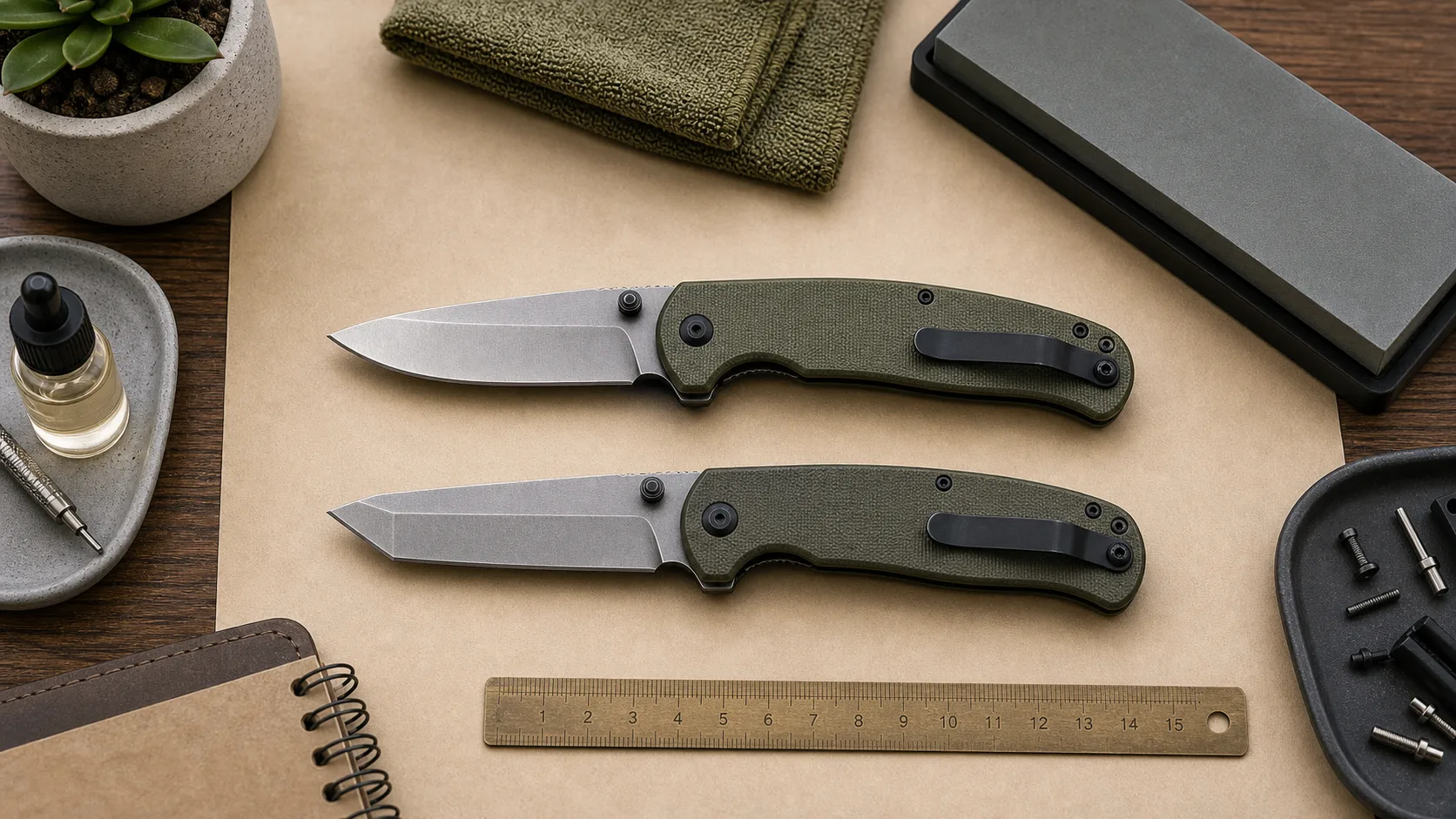
Quick answer
Buy a drop point pocket knife if this is your first folding utility knife or if you mostly cut boxes, tape, cordage, food packaging, and camp materials. Buy a tanto pocket knife only if you specifically want the angular tip profile and you accept the sharpening tradeoff.
For most DISPATCH buyers, the drop point is the better cart decision. Start with the 3 inch drop point liner lock pocket knife for compact utility or the 3.58 inch drop point G10 folding knife if you want more cutting reach. Compare the 3.54 inch tanto point folding knife only after you decide that the blade shape itself is the reason you are buying.
| Buyer question | Drop point answer | Tanto answer | Best DISPATCH comparison |
|---|---|---|---|
| Which is better for a first knife? | Drop point. It is easier to understand and more natural for everyday slicing. | Not usually first. Buy it for a specific shape preference. | 3 inch drop point vs 3.54 inch tanto |
| Which is better for cardboard? | Drop point for smoother draw cuts and fewer sharpening complications. | Useful for scoring, but less smooth across long cardboard cuts. | 3.58 inch drop point G10 |
| Which is easier to sharpen? | Drop point, because the edge shape is more forgiving. | Tanto needs more care at the angle transition. | Check the maintenance guide before choosing the tanto. |
| Which feels more distinctive? | Drop point is practical and plain in a good way. | Tanto has the stronger visual identity. | Use the tanto as a style-and-shape choice, not a universal pick. |
Why drop point wins for most buyers
A drop point blade does ordinary work without asking for much explanation. It slices open boxes, trims rope, handles food packaging, cuts garden twine, and fits the kind of camp chores most people actually do with a folding knife. The spine drops toward the tip, which keeps the point controllable without making the edge feel awkward.
That is why the drop point should be the default recommendation. It is not flashy. It is useful. If a buyer is already on a product page and wants a reason to move forward, “this shape matches the work I do every week” is the cleanest reason.
The 3 inch drop point liner lock pocket knife is the easy compact option. The 3.58 inch drop point G10 folding knife is the more capable size for longer cuts. Both are simpler buying decisions than a tanto for a first folder.
Why someone still buys a tanto
A tanto is not pointless. It is just more specific. The angular tip and secondary edge can appeal to buyers who do more scoring, scraping, and controlled point work. It also looks different, and style is a real part of buying a pocket knife as long as the practical limits stay visible.
The 3.54 inch tanto point folding knife belongs in that lane. Buy it if you want the shape and understand that it is not the smoothest all-purpose slicer. Do not buy it because the silhouette looks tougher in a thumbnail.
The important tradeoff is sharpening. A tanto edge has a transition where the main edge meets the front edge. If you round that over, the knife loses the clean geometry that made you choose it. A patient owner can maintain it. A buyer who wants quick, easy touch-ups after cardboard should choose a drop point.
Task-by-task decision
For package opening, choose drop point. The tip is easy to control, and the belly of the blade moves naturally through tape and cardboard.
For cardboard breakdown, choose drop point again unless you specifically score panels. The edge path matters more than the look of the tip when you are making repeated draw cuts.
For camping utility, choose drop point for food packaging, rope, repair tape, and light prep. Clean and dry the blade after wet or acidic use.
For a gift, choose based on the recipient. A drop point is safer as a practical recommendation. A tanto can be a better gift only if the recipient likes the shape and already understands folding-knife care.
Handle and lock still matter
Do not let blade shape become the whole purchase. A useful folding knife also needs a handle that stays put, a lock the buyer understands, and a size that fits the pocket or kit. G10 is a good sign for utility buyers because it adds texture without turning the knife into a display item.
On the current DISPATCH shortlist, the cleaner product comparisons are the G10-handled drop point models against the tanto model. The question is not “which shape is strongest?” The useful question is “which shape will make my normal cuts easier?”
What to verify on the live listing
Before buying, confirm the current listing details. Product data can change, and retailer language can be broader than this site’s utility-first scope.
Check:
- The product title and ASIN match the model.
- Blade length is still what you expect.
- Blade steel is listed clearly.
- Handle material and lock type match the guide notes.
- Opening style is legal and appropriate where you live.
- The listing does not push the product outside ordinary tool use.
If any of those details are vague, slow down. A better buying decision is one you can explain in one sentence.
Buying recommendation
Most buyers should put a drop point in the cart first. Choose the 3 inch drop point for compact package and pocket utility. Choose the 3.58 inch drop point G10 model if you want more slicing reach.
Choose the 3.54 inch tanto when the shape is the point of the purchase and you are willing to sharpen it carefully. That is a narrower recommendation, but an honest one.
If you want the knife that will feel useful the first week, buy drop point. If you want the knife that feels more distinctive and you accept the maintenance, buy tanto.
Sources and verification
These external references support product identity, mechanisms, maintenance, sharpening, safety, or law-checking. Retail listings and local rules can change, so verify current details before acting.
Practical guides for choosing and caring for folding knives
Start with direct buying guides, material explainers, maintenance notes, and safety limits before choosing a folding knife.
DISPATCH drop point vs tanto folding knife
A DISPATCH buyer comparison of drop point and tanto folding knives for daily utility, cardboard, camp tasks, sharpening difficulty, and product-fit checks.
Best pocket knife for opening boxes and cardboard
A buyer-focused guide to choosing a folding pocket knife for packages, cardboard, tape, and light household utility without weapon hype.
Pocket knife sharpening angle chart and guide
A practical pocket knife sharpening angle chart for choosing a durable working edge without grinding away steel or chasing a fragile bevel.
DISPATCH Amazon starter shortlist
Use these first picks to compare blade size, handle texture, lock style, and everyday utility tasks before checking final product details on Amazon.