Care
Pocket knife sharpening angle chart and guide
A practical pocket knife sharpening angle chart for choosing a durable working edge without grinding away steel or chasing a fragile bevel.
As an Amazon Associate I earn from qualifying purchases.
Research basis: maintained product records and referenced background material. This page does not claim hands-on testing unless it documents that work explicitly. Editorial method.
Quick answer
For an everyday folding pocket knife, choose a practical working edge before you chase a perfect number. A lower angle can slice cardboard and tape more easily, but it can also be more fragile. A higher angle gives more support for ordinary utility cuts, but it may feel less keen. The best starting point is usually to follow the factory bevel, sharpen lightly, and stop as soon as the knife cuts cleanly again.
For DISPATCH examples, a drop point such as the 3 inch drop point liner lock pocket knife is the easiest shape to maintain. The 3.58 inch drop point G10 folding knife gives more edge length to keep consistent. The 3.54 inch tanto point folding knife takes more attention because the edge changes direction.
If you only need a fast pocket knife sharpening angle chart, use the ranges below as a decision aid, then follow the existing bevel unless you have a clear reason to change it.
Per-side angle versus included angle
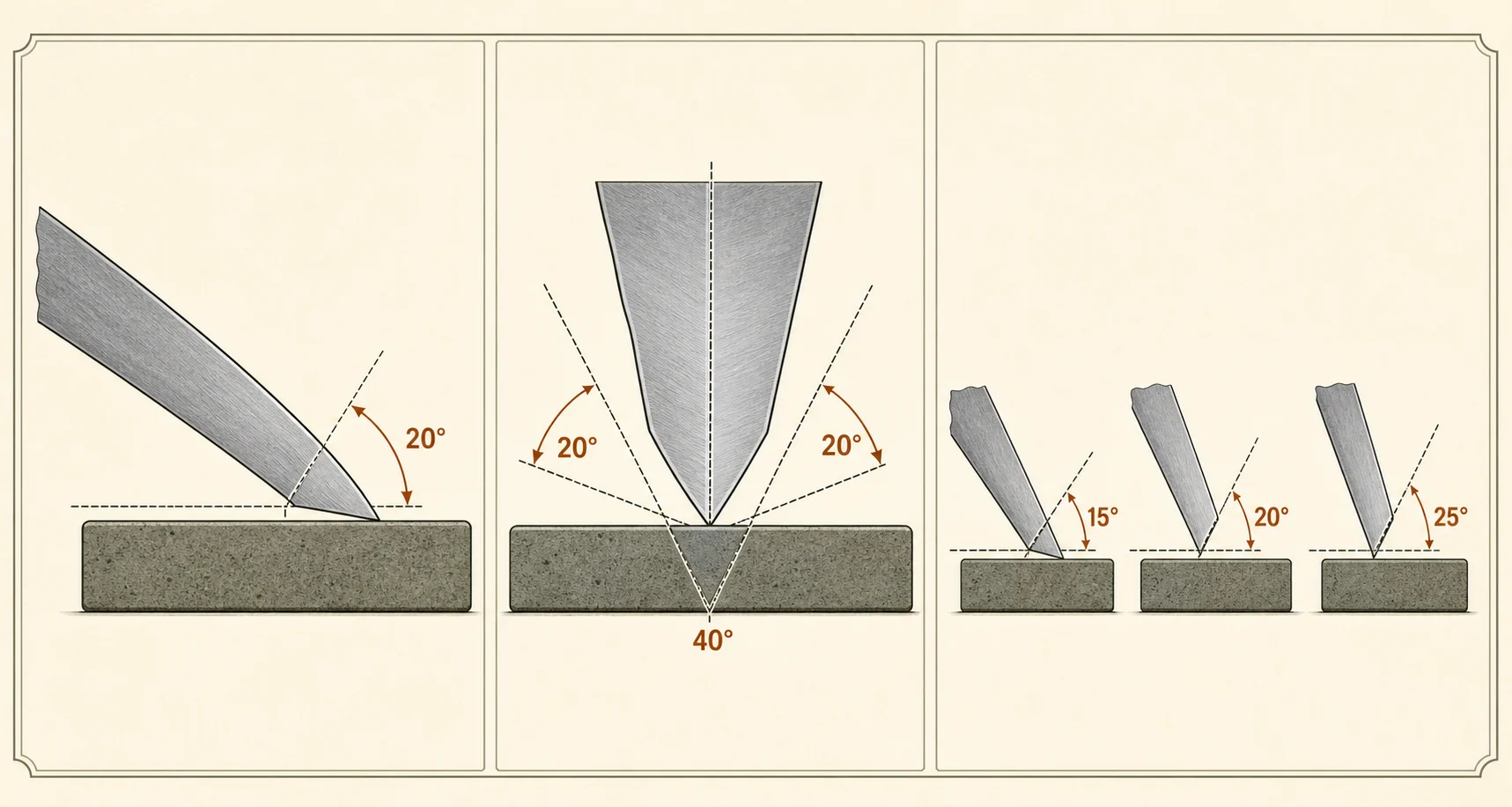
The ranges in this guide are degrees per side. A knife sharpened at 20 degrees per side has an included edge angle of about 40 degrees. Sharpener packaging and manufacturer instructions do not always use the same convention, so check whether a number describes one side or the complete edge before changing a setting.
For a folding knife used on packages and cardboard, the practical choice is usually to match the existing bevel. Use a marker on the bevel and make a few light passes: if the abrasive removes the marker evenly from shoulder to edge, the setup is close to the current angle. If it removes material only at the shoulder or only at the very edge, adjust before continuing.
Pocket knife sharpening angle chart
Most folding pocket knives are maintained by angle per side. The exact factory angle varies by brand, model, blade shape, and previous sharpening. Use this chart as a practical starting point, not as a promise about a specific listing.
| Angle choice | Best for | Watch out for | Simple rule |
|---|---|---|---|
| Match the factory bevel | Routine touch-ups and beginners. | Factory edges vary, so watch the scratch pattern. | Remove as little steel as possible. |
| About 15-17 degrees per side | Cleaner slicing on paper, tape, and thin cardboard. | Edge can roll or chip sooner in rough work. | Use only when the task is light and controlled. |
| About 18-22 degrees per side | Cardboard, cordage, and mixed utility work. | May not feel as razor-like. | Choose durability over show sharpness. |
| Higher than 22 degrees per side | Rougher utility edges where support matters more than slicing feel. | Can feel thick behind the edge for package work. | Use only when the old edge already supports it. |
| Guided sharpener setting | Repeatable angle control for beginners. | Clamp position and blade shape can change the real angle. | Set up slowly and test with light passes. |
Start by reading the existing edge
Look at the current bevel before you touch a stone. If the edge still has a consistent bevel, a light touch-up is better than a full reprofile. Marking the bevel with a removable marker can help show where the stone is hitting, but keep the process simple and clean.
For 8Cr13MoV utility folders, the goal is a dependable working edge that you can refresh after boxes, tape, and camp packaging. Do not grind away steel just to make the edge look impressive under bright light.
Angle is a tradeoff, not a trophy
A thin edge cuts easily because less steel pushes through the material. That same thinness can be less forgiving if you twist through thick cardboard, hit staples, or scrape against dirty material. A more supported edge may not feel as delicate, but it can be better for a knife that lives in a drawer, pack, or garage kit.
Use the job to choose the edge. Packages and tape favor a keen but controlled edge. Cordage and outdoor utility favor a little more support. Dirty cardboard and mixed materials reward frequent light touch-ups more than one aggressive sharpening session.
Stones, rods, guided systems, and strops
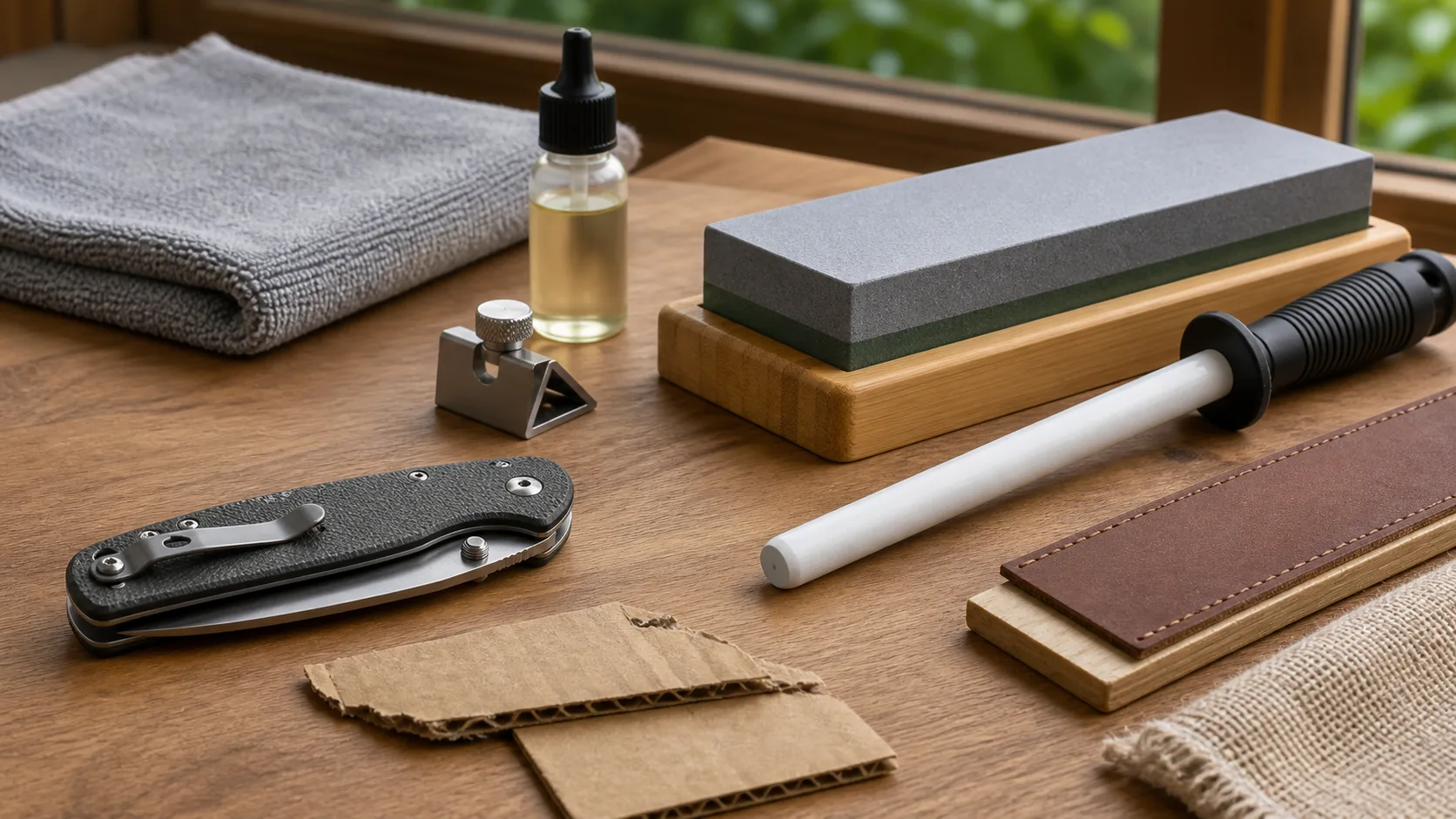
A stone gives the most control but asks for practice. A ceramic rod is useful for quick touch-ups. A guided system helps repeat an angle, but it does not remove the need to set the blade carefully. A strop can clean up a nearly sharp edge, but it will not fix a damaged bevel by itself.
Pull-through sharpeners can be convenient, but use caution. Some remove steel quickly or set an angle that does not match your knife. If the knife is already usable, a gentler tool is usually the better first move.
Use the pocket knife sharpener buying guide for tool selection, clamp compatibility, abrasive formats, and portable-versus-bench tradeoffs. Keep this page as the reference for angle choice.
Drop point versus tanto
A drop point is forgiving because the edge path is continuous. That makes it easier to keep the angle steady from heel to belly. The 3 inch drop point liner lock pocket knife and 3.58 inch drop point G10 folding knife are the easier shapes to explain and maintain.
A tanto edge has a transition where the straight section meets the tip section. Treat those sections separately. If you round over the transition, the shape loses its point. The 3.54 inch tanto point folding knife should be chosen only if you are willing to maintain that angular edge carefully.
How to know when to stop
Stop when the knife cuts cleanly through paper, tape, or scrap cardboard with light pressure. Do not keep sharpening because the edge might become slightly shinier. Extra passes can raise a larger burr, scratch the blade, or remove more steel than the task needs.
After sharpening, wipe the blade, clear grit from the pivot area, and check the lock. Sharpening dust should not be left inside the handle channel.
Before you sharpen a DISPATCH knife
Verify the current listing and product notes first. If the model is new, damaged, unusually stiff, or has lock problems, sharpening is not the fix. A sharp unsafe knife is still unsafe.
Use the knife maintenance and sharpening basics page for cleaning and basic care, then use this guide for angle decisions.
FAQ
What sharpening angle should a pocket knife use?
Use the factory bevel as the starting point. For many utility folders, a working range around 18-22 degrees per side is easier to maintain than a very thin edge, but the existing bevel should guide the decision.
Is a fixed-angle sharpener better?
It can help repeat an angle, but it still needs careful setup. Clamp position, blade thickness, and blade shape affect the real edge.
Should I change the factory sharpening angle?
Usually no. Change it only when you know the current edge is wrong for your tasks and you accept that reshaping removes more steel than a touch-up.
How do I know the edge is sharp enough?
It should cut paper, tape, or scrap cardboard cleanly with light pressure. Stop there for ordinary utility use.
Is a tanto harder to sharpen?
Usually yes. Treat the main edge and tip edge as separate sections so you do not round the transition.
Sources and verification
These external references support product identity, mechanisms, maintenance, sharpening, safety, or law-checking. Retail listings and local rules can change, so verify current details before acting.
Practical guides for choosing and caring for folding knives
Start with direct buying guides, material explainers, maintenance notes, and safety limits before choosing a folding knife.
Pocket knife sharpener buying guide
Choose the least aggressive pocket knife sharpener that restores your edge, with fit and stop checks for stones, guided systems, field tools, and strops.
How to clean and sharpen a pocket knife
Clean, dry, lubricate, and restore a practical pocket-knife working edge after packages, cardboard, cordage, and camp chores.
8Cr13MoV steel guide for pocket knives
What 8Cr13MoV steel is, how it compares with D2, AUS-8, and S35VN, and why easy sharpening matters in utility pocket knives.
DISPATCH Amazon starter shortlist
Use these first picks to compare blade size, handle texture, lock style, and everyday utility tasks before checking final product details on Amazon.