Care
How to clean and sharpen a pocket knife
Clean, dry, lubricate, and restore a practical pocket-knife working edge after packages, cardboard, cordage, and camp chores.
As an Amazon Associate I earn from qualifying purchases.
Research basis: maintained product records and referenced background material. This page does not claim hands-on testing unless it documents that work explicitly. Editorial method.
Quick answer
For a folding pocket knife used on packages, cardboard, cordage, or camp chores, maintenance starts with cleaning and drying, not with taking the knife apart. Wipe the blade, clear lint from the handle channel, dry the pivot area, oil sparingly, and sharpen before dullness makes you force the cut.
This page covers the care sequence: clean first, use light pressure, keep the existing edge angle steady, and stop when the knife cuts cleanly. If you still need to choose the tool, use the pocket knife sharpener buying guide before starting.
| Question | Short answer | Why it matters |
|---|---|---|
| How do you clean a pocket knife? | Wipe the blade, brush the handle channel, dry the pivot, and remove adhesive before oiling. | Dust and tape glue make a folding knife feel rough long before it needs disassembly. |
| How do you sharpen a pocket knife? | Use light pressure, keep a steady angle, and stop when the edge cuts paper or cardboard cleanly. | Controlled sharpening is safer than grinding away steel to chase a mirror edge. |
| What should a basic care kit include? | Cloth, small brush, light lubricant, simple sharpener, and a place to dry the knife fully. | These solve most ordinary utility problems without a teardown. |
How to clean a pocket knife
Start with the visible dirt. Open the knife carefully, wipe the blade away from the edge, and remove tape residue before it hardens. A soft brush or cotton swab can clear pocket lint, cardboard dust, and grit from the handle channel.
Drying matters. A stainless budget steel such as 8Cr13MoV still benefits from being wiped dry after wet packaging, food wrappers, or outdoor chores. Do not trap moisture in the pivot by closing the knife wet and putting it back in a pocket or drawer.
Use oil sparingly. One small drop near the pivot is usually enough. Work the blade slowly, then wipe away excess so the knife does not collect more dust.
How to sharpen a pocket knife
Sharpen when the knife starts tearing cardboard, sliding on tape, or needing extra force. For a plain-edge folding knife, a simple pocket knife sharpener should restore a usable working edge, not reshape the blade.
Keep the motion calm:
- Clean and dry the blade first.
- Use a steady angle on the stone, rod, or guided sharpener.
- Use light pressure.
- Check the edge often with paper or scrap cardboard.
- Stop once the knife cuts cleanly.
A drop point is usually easier for beginners to touch up than a tanto because the edge path is simpler. A tanto can be maintained, but the transition between edge sections needs more attention.
Choose the tool before you start
Use the pocket knife sharpener buying guide to compare stones, ceramic rods, guided clamps, field sharpeners, pull-through tools, and strops. It covers blade fit, abrasive compatibility, replacement pieces, and skip conditions without repeating the cleaning and sharpening steps on this page.
If angle choice is the confusing part, use the pocket knife sharpening angle guide before removing more steel.
Pocket knife maintenance kit
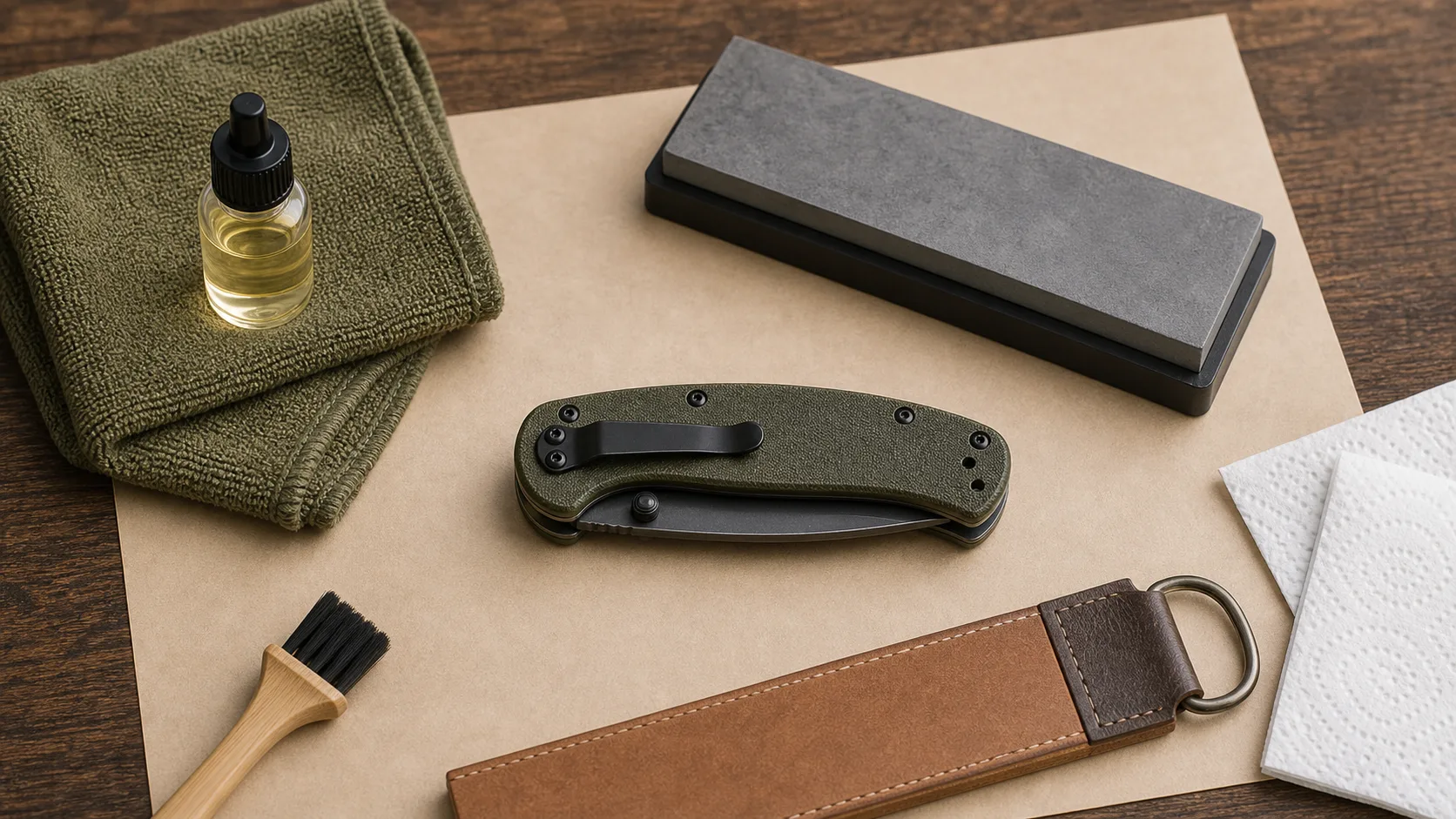
A practical pocket knife maintenance kit can be small: microfiber cloth, soft brush, cotton swabs, light lubricant, a simple sharpener, and scrap cardboard for testing the edge. Add a parts tray only when you are adjusting screws or doing careful inspection.
Do not treat a maintenance kit as permission to disassemble every knife. If the knife only has tape residue, lint, or a tired edge, clean and sharpen first. Full disassembly belongs in a separate maintenance workflow and may affect warranties or small parts.
What to avoid
Avoid powered grinding, heavy pressure, and sharpening so aggressively that the blade shape changes. Avoid soaking the pivot in oil. Avoid making food-contact claims unless the lubricant or cleaner is clearly sold for that purpose.
Also avoid combat topics, concealed-carry language, copied Amazon content, stale prices, and any suggestion that local laws can be ignored. This guide treats folding knives as adult utility tools for controlled cutting, maintenance, storage, and lawful use.
FAQ
How often should you sharpen a pocket knife?
Sharpen when the knife starts tearing cardboard, sliding on tape, or needing extra force. For ordinary utility use, frequent light touch-ups are better than waiting until the edge is completely dull.
Can you clean a pocket knife without taking it apart?
Yes. Most routine cleaning should happen without disassembly: wipe the blade, brush the handle channel, dry the pivot area, and use only a small amount of lubricant.
Is a pull-through sharpener bad for a pocket knife?
Not always, but its angle, abrasive, and supported edge shape must match the knife. The sharpener buying guide explains when to choose or skip one.
Sources and verification
These external references support product identity, mechanisms, maintenance, sharpening, safety, or law-checking. Retail listings and local rules can change, so verify current details before acting.
Practical guides for choosing and caring for folding knives
Start with direct buying guides, material explainers, maintenance notes, and safety limits before choosing a folding knife.
Pocket knife sharpener buying guide
Choose the least aggressive pocket knife sharpener that restores your edge, with fit and stop checks for stones, guided systems, field tools, and strops.
Pocket knife sharpening angle chart and guide
A practical pocket knife sharpening angle chart for choosing a durable working edge without grinding away steel or chasing a fragile bevel.
Folding knife maintenance and disassembly guide
When to clean, oil, inspect, or skip disassembly on a folding pocket knife used for ordinary utility tasks.
DISPATCH Amazon starter shortlist
Use these first picks to compare blade size, handle texture, lock style, and everyday utility tasks before checking final product details on Amazon.