Care
Folding knife maintenance and disassembly guide
When to clean, oil, inspect, or skip disassembly on a folding pocket knife used for ordinary utility tasks.
As an Amazon Associate I earn from qualifying purchases.
Research basis: maintained product records and referenced background material. This page does not claim hands-on testing unless it documents that work explicitly. Editorial method.
Quick answer
Do not make disassembly the first maintenance step. For most folding pocket knives, start by wiping the blade, brushing lint out of the handle, drying the pivot area, adding a very small amount of suitable lubricant, and checking that the lock still opens and closes predictably. Full teardown is for a specific problem, not routine care after every box or camp chore.
For DISPATCH buyers, the 3.54 inch 8Cr13MoV G10 folding pocket knife is the best general maintenance example because it combines a practical stainless steel, textured G10, and ordinary utility tasks. The 3 inch drop point liner lock pocket knife is the compact lock-and-pivot example. The 3.58 inch drop point G10 folding knife adds more blade surface to clean after cardboard, cordage, and camp packaging.
| Problem you notice | Try first | Disassemble? | Stop if |
|---|---|---|---|
| Tape residue or cardboard dust | Wipe blade, clean handle channels, dry the knife. | No. | The lock feels gritty or unreliable after cleaning. |
| Rough opening after pocket carry | Brush lint from the pivot area and add a tiny amount of lubricant. | Only if the action stays rough and you understand the mechanism. | Screws strip, the blade has play, or the lock does not seat clearly. |
| Light surface rust risk after wet use | Dry fully, inspect edge and pivot, then oil lightly. | No unless water or grit is trapped inside. | Rust is spreading or the edge is damaged. |
| Loose or inconsistent lock feel | Stop using the knife and inspect safely. | Not as a casual fix. | The blade moves unexpectedly or the lock does not hold. |
Clean before you take anything apart
A folding knife picks up lint, tape glue, plant matter, cardboard dust, and pocket grit long before it needs a full teardown. Clean the visible areas first. Wipe the blade away from the edge, brush the handle channel, dry around the pivot, and work the blade slowly to see whether the action improves.
Use less oil than you think. A heavy oil bath can attract more dust and make the handle messy. One small drop at the pivot, followed by opening and closing the blade a few times and wiping off excess, is a better starting point than soaking the knife.
What belongs in a pocket knife maintenance kit
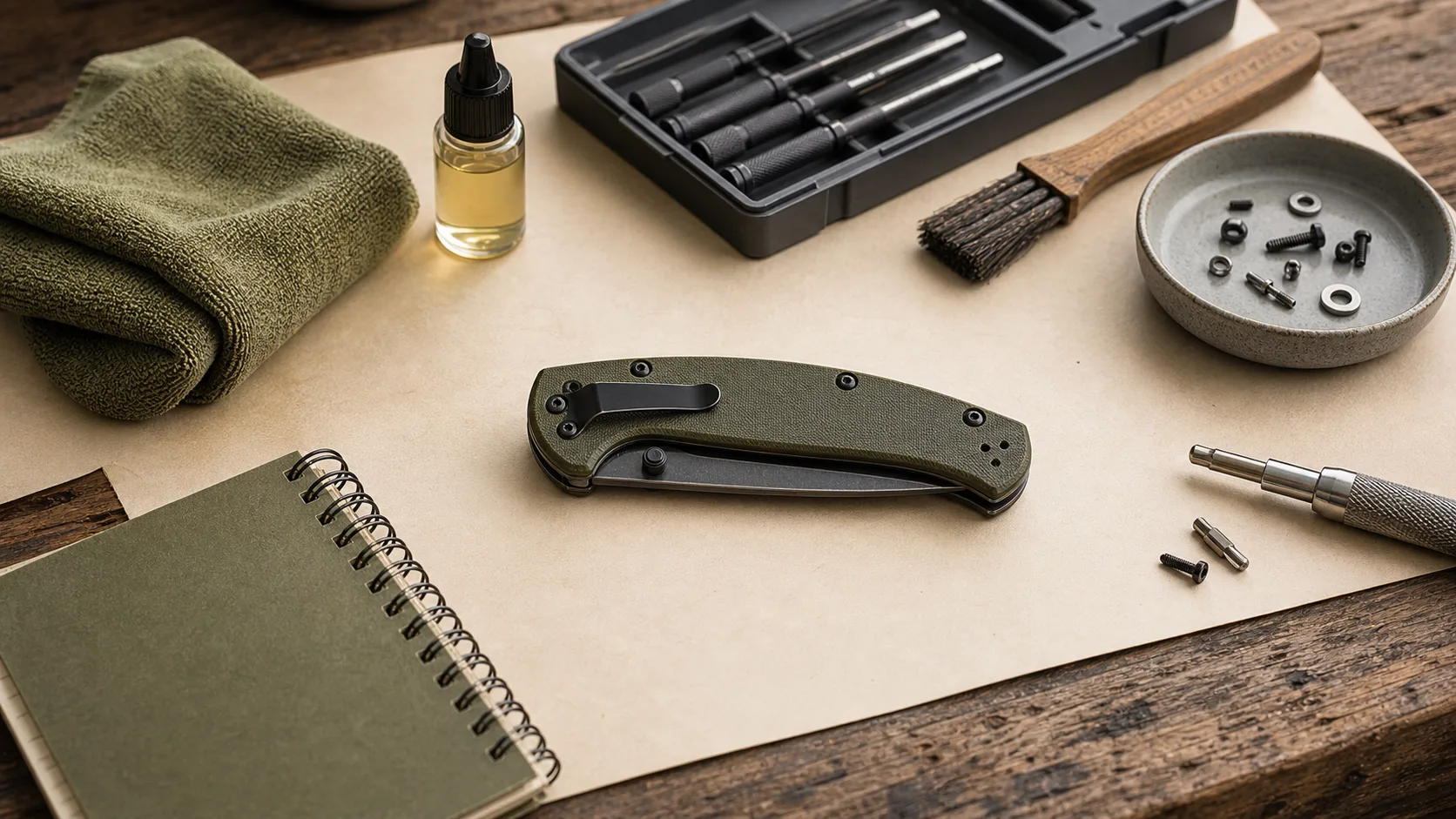
A pocket knife maintenance kit should be small and boring: microfiber cloth, soft brush, cotton swabs, a light tool-safe lubricant, a simple sharpener or strop, and bits that fit the knife only if you already understand the pivot. The kit is there to clean, dry, oil, and touch up the edge after ordinary utility work, not to turn every rough-feeling knife into a teardown project.
For most buyers, the sharpener matters more than extra hardware. Cardboard, tape, cordage, and gritty packaging dull an edge faster than they damage the pivot. Keep the edge easy to refresh, keep the pivot clean, and save disassembly tools for problems that cannot be solved from the outside.
When disassembly makes sense
Disassembly can make sense when the knife has trapped grit, persistent rough action, or a maintenance problem that cannot be solved from the outside. It is not a universal beginner step. Different folders use different pivots, washers, bearings, springs, screws, and lock geometry. A teardown example for one model does not prove that another knife should come apart the same way.
Skip disassembly when:
- The knife is new and the live listing or warranty details are unclear.
- You do not have bits that fit the screws cleanly.
- The lock already feels unsafe.
- The model may be assisted, automatic, or spring-driven.
- You cannot keep track of small parts.
- You only need to remove tape residue, dust, or light moisture.
If the lock is unreliable, treat that as a safety problem, not a cleaning challenge.
Oil choices without hype
Oil should solve a maintenance problem: corrosion control, pivot smoothness, or temporary storage protection. It should not become the main reason to trust a knife. For routine utility use, choose a product appropriate for knives or tools, use it sparingly, and avoid making food-contact claims unless the lubricant is clearly sold for that purpose.
Rust-prevention tests and creator preferences can be useful for learning the vocabulary, but they are not a substitute for your own use case. A knife that cuts cardboard in a dry garage needs different care from a knife that rides in a damp camp kit.
How the DISPATCH examples fit
The 3.54 inch 8Cr13MoV G10 folding pocket knife is the broadest example. Its 8Cr13MoV stainless steel still needs drying and edge touch-ups, but it is a practical steel for buyers who want maintenance to stay simple.
The 3 inch drop point liner lock pocket knife is the one to study if compact carry and lock feel matter. Before buying, verify the live opening-style wording because product pages can change.
The 3.58 inch drop point G10 folding knife gives more blade for camp packaging and cordage, which also means more edge and surface area to inspect after dirty work.
The 3.54 inch tanto point folding knife belongs in a maintenance discussion because the angular edge takes more attention. If you round over the transition while sharpening, you lose the point of choosing the tanto shape.
Before you put the knife back in service
Check the knife after cleaning:
- The blade is dry.
- No lint or grit is visible in the handle channel.
- Excess oil has been wiped away.
- The lock opens and closes consistently.
- There is no new blade play.
- The edge is sharp enough for controlled utility cuts.
- Local rules and workplace rules still allow the knife where you plan to use it.
If any point fails, slow down. A clean knife that does not lock predictably is not ready for use.
FAQ
Should I disassemble a new folding knife?
Usually no. Start with inspection, cleaning, and light lubrication. Disassembly can affect warranty, damage screws, or change lock behavior if you are not familiar with the mechanism.
How much oil does a pocket knife need?
Very little. Use a small amount at the pivot, move the blade slowly, then wipe away excess. Too much oil collects dust and makes the knife harder to keep clean.
What if the lock feels unsafe?
Stop using the knife. Do not force the mechanism, and do not treat lock failure as a normal maintenance issue.
Can one teardown guide fit every folding knife?
No. Pivot construction, washers, bearings, springs, screws, and lock geometry vary by model. Use general care principles, then verify the specific product before taking anything apart.
Sources and verification
These external references support product identity, mechanisms, maintenance, sharpening, safety, or law-checking. Retail listings and local rules can change, so verify current details before acting.
Practical guides for choosing and caring for folding knives
Start with direct buying guides, material explainers, maintenance notes, and safety limits before choosing a folding knife.
Folding knife pivot adjustment guide
How to think about stiff action, washers, bearings, blade centering, pivot screws, lubricant, and when not to adjust a folding knife.
How to clean and sharpen a pocket knife
Clean, dry, lubricate, and restore a practical pocket-knife working edge after packages, cardboard, cordage, and camp chores.
How to close a pocket knife with no button (by lock type)
How to close a pocket knife by lock type, including liner locks, frame locks, back locks, button locks, and folders with no button.
DISPATCH Amazon starter shortlist
Use these first picks to compare blade size, handle texture, lock style, and everyday utility tasks before checking final product details on Amazon.